Pages

Showing posts with label GM Tricks. Show all posts

21 July 2014

Video Games can make your RPG better!

...or how to get source material for your RPGs from AAA games.

Let's talk about video games for a while. While tabletop gaming has stayed more or less a niche hobby, video games have gone through quite a journey since their humble beginnings. There is no denying that video games' popularity sky-rocketed in the past decade or so. Thanks to that, AAA video game companies nowadays have budgets comparable to blockbuster movies. They spend a lot of money on writers, designers and artists. Not to mention paying for focus groups and playtesters to make sure the game is accessible and satisfying. There are a lot of creative and talented people working in the video games industry right now, making really awesome things. That's a lot of high quality art, plots, levels and other designs just waiting to be discovered.
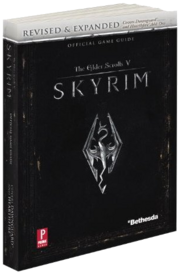
Even if you are not an AAA gamer (like myself), you can take inspiration (or simply take ready-made pieces) from those blockbuster games and use it in your campaign. You can find everything - from detailed dungeon maps, through fully fleshed NPCs, interesting monsters, adventure and quests ideas to small things like magic items and weapons. You get some inspirational quality artwork to go with this as well. If you look at it the right way - all of this is a system-agnostic source material, that can be hacked and transplanted straight into your games. Just choose a video game with a similar setting to what you are currently running and you are good to go.

Apart from the ready made content, video games can teach us a bit about good design practices. Of course, not everything will seamlessly translate to the tabletop medium, but there are some interesting video game "mechanics" we can use in our sessions.

Video game artbooks, strategy guides and (most importantly) wikis hold a plethora of content for you to choose from. Fan curated wikis are the highlight of the bunch. What they lack in art, they make up with detailed descriptions and accessibility. After all, they are available freely online. Below you'll find examples of where and what to look for when mining those sources for good inspirational content.

Items, Weapons, Armor and all that jazz.

You can always use some more clutter in your games, right? Well, wikis (especially those for cRPGs) are the to go places for findings items that will fit your campaign. Almost every wiki will have a page dedicated to showcasing the games equipment. Like the ones for Dragon Age: Origins or Skyrim. Of course the damage and prices won't translate 1:1 to your system of choice, but you get some cool art and often some flavor text - really, that's all you need to introduce some new items.
It gets even better when you want some artifacts. Unique equipment from computer games will usually have a story behind it and much cooler design.
If you are simply looking for art to either represent the item during a session or for inspiration, you can't go wrong with artbooks. They will usually have a section dedicated to equipment filled with gorgeous concept art. It is worth investing into few AAA game artbooks.


Design wise, many computer games nowadays are moving away from simply giving the player better "stuff" as the game progresses. Sure, it seems logical to give  players more powerful weapons and armor every time they achieve something. The truth is, by doing so you will soon run into a power creep issues. On the tabletop side of gaming, this means that you have to make your enemies stronger to pose any challenge to the players. You are also taking away choice from the player. After all, it's a no-brainer to exchange the sword+2 with a mace+4.

To avoid that, you can experiment with Team Fortress 2 style item mechanics (as pictured above). Each of them has a strength and a weakness, so no single item is clearly better than the other. In games like that, players choose weapons based on their play style and current situation. Maybe the new crossbow is much more powerful but it is very loud, or take forever to reload? This way you allow your players to experiment with different tactics, which can be a fun experience. 

Level Design, dungeons, towns...and names?.
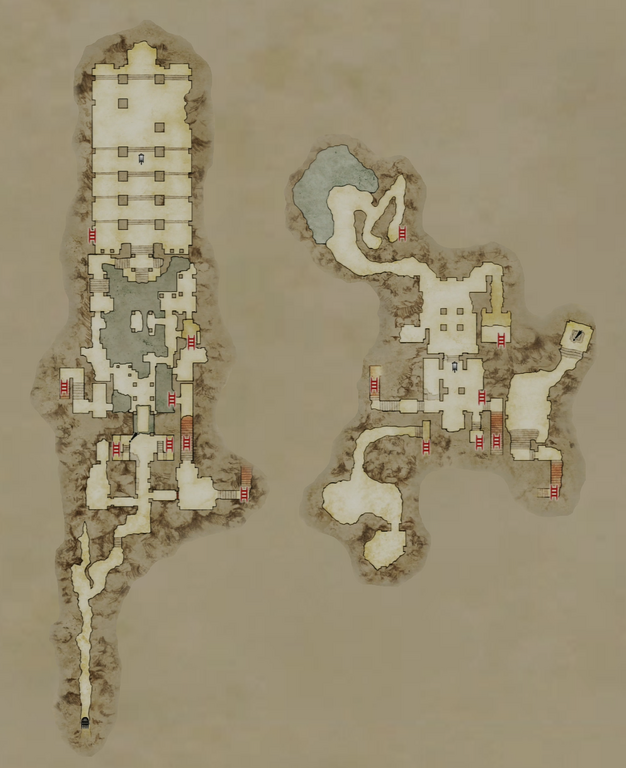
Every game needs to take place somewhere, so why not use what's already there? When you need a dungeon or a town, you can do much worse than "borrowing" one from a video game. Heck, cRPGs and action games are basically littered with them.
For maps your best bet is to go with a strategy guide. Wikis have maps here and there, but any strategy guide worth it's salt will have maps paired with detailed descriptions of what is found where. Getting few strategy guides shouldn't be a big burden, as they can be found online and in charity shops for next to nothing.

For gameplay reasons you won't find vast mega-dungeons and truly city-sprawling settlements in video games. A small dungeon or a nice looking village/town (re-skinned from a video game "city") map can be found easily, usually with some cool location names, enemy types and some vistas to go along with it. Use the whole "set" or pick and choose what you want. Try to stay away from very iconic motives, especially names. You probably have players who know what Winterhelm, Megaton or Kaer-Morhen is, but not many of them will know where the Frostmere Crypt, Cottonwood Cove or Loc Muinne comes from. So, don't be afraid to take few names and put them in your campaign - video games are filled with good location and NPC names.

Monsters and other Enemies
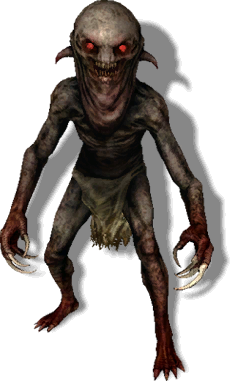
Steal enemies. Plain and simple. The video game monster come not only with great artwork that can be an inspiration for narration, they also have their own tactics, flavor text and possible loot drops. More than this, many video game monsters have special moves and AI. Maybe they attack in swarm and explode upon deaths? Maybe they are immune or have a weakness against certain element? All of those things can be adapted to tabletop and they make for a fight. When looking for interesting monster AI, look outside the cRPG genre. Action games have a wider variety of monster behaviors. A good source for Boss enemies are MOBAs. Each "character" in any MOBA has a set of skills that can be translated to some cool RPG attacks. Because of recent MOBA popularity you can find very detailed wikis describing them. You can easily re-skin those characters to make an interesting boss encounter.

Is that all?

Not by a long shot. There is a lot more that can be mined from AAA games - NPCs, quests, subsystems, mechanics and we didn't even touched on the topic of music (game soundtracks make a great session background noise). There is also much more we can learn from analyzing the game's design choices. But this topic is way to big to fit into a blog post (and possibly my brain).

Bottom line is - AAA video games must be doing something right to stay so popular, so why not use some of their content in our hobby? Thanks to fan created wikis, official artbooks and strategy guides we are given great amount of inspirational tools. So, visit some game wikis, get some cheap strategy guides from your local charity store, invest in some artbooks from games you really enjoy and mash, hack and adapt this content to RPGs!

06 July 2014

Who, What, Where, When, Why, How to improvise - part 2

In Part 1 of this article we established that a key to successful improvisation is to “Ask questions and use the answers”. If you want to create more fleshed out details you should ask yourself more than one question. Feel free to use a variant of the 5Whys technique. Don't concentrate on just the Whys - use any open ended question word (Who, What, Where, When, Why, How) you can/want to get more interesting answers. 

Before we move any further, try improvising some content for your current game from one of the questions below. Ask yourself a chain of at least 3 questions based on your previous answers to see what you can come up with. To get detail - think about your current game - the setting, the player characters and their past.

  • Who lives in this house?
  • What does this stranger want from you?
  • Where is the artifact hidden?
  • When will the assassin strike?
  • Why is there blood here?
  • How did this beast got in here?


It might seem tricky at first to come up with good answers on your own, but don't be discouraged. The goal of this silly exercise is to make you more confident with asking yourself open ended questions when fishing for answers, not to come up with great answer. Inspiration for great content will come to you as you play the game - party's previous exploits, setting details or even a piece of art... heck, maybe even one of those dreaded random tables! 

Now you know how to create some random content on the spot, let's see how to use it during a game.

Where to Start?

First of all, don't be afraid to fail when you start. Not everything you come up with on the spot will be gold. Even with years of practice, some things that you will come up with won't be great - and I speak from personal experience on that front. Don't get discouraged

When you are stating tinkering with improv, create a "safe space" in your game where you can fail and it won't matter. You can use a trick that I was almost abusing when I was starting - creating "side quests".

Prepare for your session as you would normally. 
As you do, identify some spots in the adventure, where player characters have some down time or are doing something that requires a lot of time - travelling, investigating, research etc. Now think of a few small things that COULD happen during this time. Ask yourself "What can happen to the [player] during [x]?". Meeting strangers while travelling, getting pick-pocketed while in a busy market - that sort of things. Write down few of those small things. If you want to experiment with random tables - come up with 6 things, so you can roll a D6 to find out what happens during the game.

As you get to this spot in the adventure, choose one of the things to happen to player characters. Let them interact with it. They will you some questions about the encounter and from that you can come up with some answers using the open ended questions. Just ask yourself a series of them in your mind and come up with something - anything. If it is not a great answer, nothing is lost - PCs will continue down your planned adventure. If, however, some of your answers will spark the players imagination - they will follow this little unscripted plot. Now you will have to ask yourself more questions to create more content. (Pro Tip: If you are short for ideas on the spot, excuse yourself to the bathroom or to grab a drink - use this time to come up with something juicy).

The beauty of this "side quest" approach is that you can stop it an any time without disturbing the overall plot. So whatever you come up with, you won't work yourself into a corner - plotwise. This way, you can't lose!
A word to the wise: before you start doing this often, tell your players that random things can happen to their characters. After all - it is a living world and not everything is connected to the adventure at hand.

What and When to Improvise?

When you are starting out, you should focus on improvising small details and adding some side quests for flavor. Add random details to the scripted content - maybe use a sense that you don't normally cover in your narration. Smell can be a powerful tool here, just add random smells to NPCs and locations. Add some small details to anything you can. A shield the PC found is not just a generic shield, it has dents, old blood stains and has a coat of arms of a local barony on it. Suddenly everything in the game world will seem more alive and complete. From that, players will ask you questions. Who did this shield belonged to? Did we just kill a noble? 

Those questions should be a trigger for you. They are an opportunity. They mean that the player is interested in some aspect of the world and they want to investigate it further. You want to answer those questions. Each of them is a potential side quest. And you know what a collection of interconnected side-quests is? A whole adventure. Unscripted! Just like that! 

Your players are your biggest asset when it comes to sparking your imagination. They will give you the ideas that you can develop on the spot into plots. Adventures created this way will seem more organic, more connected to the characters. You no longer require to come up with mysterious strangers to give the PCs a task. Players themselves are being proactive into creating their own adventures. You bait them with some random detail, and they will basically create the scenario for you. It's that simple - all you need to do is to answer some questions!

Go! Start Improvising!

04 July 2014

Who, What, Where, When, Why, How to improvise - part 1

If you followed this blog for a while you know that I love all kinds of improv in my tabletop roleplaying. I am pushing things like hexcrawl and random tables down my readers' throats for quite some time now... and will continue to do so. Don't get me wrong - I enjoy scripted adventures as much as any of you, but the constrains of adult life usually stop me from preparing those. So I turn to more free-form games - narrative RPGs, story games - basically things that were created for zero prep gaming. Those are great, but usually not suitable for long-term play. So, if I want to run a long term campaign in a traditional RPG, I improvise a lot.

And so can YOU!

The aim of this article is to show you how to start improvising during the game. I want to focus on the basics and give you the tools, so you can start tinkering with improv yourself. My approach to improv is by no means the only way to improvise during session, but it is something that has worked for me for years. I hope it will do the same for you.

Why Improvise?

I started improvising my games because I had less and less time to spend on my session prep. If you are having the same issue, I strongly encourage you to give improv a try. Even if the session is not as polished as a fully preped one, it is still better than no session at all, especially when time is a valuable commodity.
I kept improvising, because this style of GMing gives me a similar feeling to that of a player. The sense of wonder, discovery and surprise that every session brings. You won't know what hides around next corner. While you might know who the bad guy is, but you have no idea how the players will stop him. If you had been GMing for a long time, this approach will feel like a breath of fresh air. Not knowing all the details of the plot might seem a bit scary, but trust me, it is very rewarding and will create amazing stories.
Lastly, the way I improvise (or maybe just explain improvisation) includes some techniques that you will find helpful in your life away from table. They are are used in training programs for journalism, management and general problem solving. While I might sound like a snake oil salesman trying to push some dodgy product on you, those techniques (even if looking and sounding silly) can help in your everyday life.

Who Can Improvise?

Anyone!

No, honestly - anyone can improvise. It is a skill and like many others, can be learnt. Wannabe actors pay good money for improv classes. You, as a tabletop roleplayer, have a head start. If you had even been a player - you have improvised. If you ever had to wrangle players back to the plot while GMing - you have improvised.

It might not seem as such, because it was just a small part in a larger, pre-scripted, scenario. But this is exactly how you start. No one is asking you to start a session with 0 preparation and come up with an amazing story right away. I want you to start small and level up your improv skill over time. Improvisation is an art that builds up on input of others. In tabletop RPG terms it might be your PCs' past exploits, their background and their knowledge. It will also be based on the rules and contents of the world you are playing in. Lastly, the extra input will come from the players themselves - your friends around the table. Don't be afraid to share the improv load.

How to Improvise?

This is it. This is the Holy Grail that you traveled here for. Gone trough all those lines of text. Dear gods, so many letters! Now, the secrets to successful improvisation lay before you. Finally, you discover that to become an Improv GM you have to...

Ask Questions.

I know, I know. It seems quite disappointing, but this is the trick to improvisation during a session. Whenever you need to introduce some unscripted element in your games you need to ask yourself few open ended questions. You know, those questions that start with Who, What, Where, When, Why and How. They are called Five Ws (or as I knew them in the UK, 5 bums on the rugby post) and are commonly used in nformation-gathering. This is the exact formula I am using when I need to come up with something on the spot.

Let's say I need to introduce a NPC. I will ask myself few questions about him. How does he look like? What is his agenda? Where do players meet him? I go trough the same process with places, items, even with players questions: "What's in this castle?"

You don't have to answer all the questions that come to your mind. Answer the ones you can and go from there. Keep your answers within the boundaries of the setting. The castle might be owned by a baron who dabbles in necromancy in a dark fantasy, or it can be overrun by monsters crawling out of a portal in the dungeon in a heroic game. Each answer should lead you to a new question. Why does the baron want necromantic powers? Where does the portal lead to? Don't be afraid to introduce details from the PCs past. The baron has gone corrupt after you cleared out his black market and killed his lover, he wants to bring them back. The portal leads to a dimension where you banished that demon - he plots revenge by opening it near you. With a little practice you will be able to create content for your game like that in seconds.

Bottom line, to be good at improvisation you need to “Ask questions and use the answers”. Just remember to take details for your answer from the setting and the player characters' past - this will create truly memorable encounters.

Oh, one more thing - if you can't think of a good answer for your question, don't be afraid to ask the players. You can do it either "out of character" by just saying - "what do you think is in there?" or root it in the game world by connecting it to the player characters - "You used to serve under barons in this kingdom, do you remember anything about this castle?"

***

It is getting late and the post is getting long, so I will split it in two. Stay tuned for answers to such mind-boggling questions like: "Where to Start?" and "What and When to Improvise?"
Edit: Now you can check out Part 2!

28 March 2014

Savagely describing combat

I always had a problem with hit points. Chipping away health, bit by bit, with a sword? It doesn't seem "real" to me. Fights should be brutal. Hitting someone with a sword WILL leave a big mark and cripple you in some way. No matter if you are man or a beast.

This is why I adore Savage Worlds system. For most creatures in the world (extras) it takes one good hit to get rid of them. The not-so-good hits make them Shaken - hurt enough to be out of the fight for some time. Simple, pretty realistic and a great base for narrative description.

I think this simple combat narration can add a lot of flavor to games. Recently, I stumbled upon a deck of cards being kickstarted just for that - you should check out the Combat Description Cards for Storytellers and GMs.

Before I was aware of the Combat Description Cards, I was using critical hit tables from Warhammer Fantasy Roleplay. WFRP has a hit point system, but the tables can be used to represent both Shaken, Wounded and Incapacitated in Savage Worlds. I am using the tables and sometimes the webapp from Winds of Chaos.

Those charts are pretty gory and grim, often adding extra rules (test modifiers, weapon dropping etc). Use those extra rules if you are after more grim and gritty experience, or skip them and use only the descriptions for more heroic feel. Simply use low numbers for Shaken (1-5), mid for Wounds (6-10) and anything above 10 for death.

I am also toying with an idea for creating charts or cards like that exclusively for Savage Worlds. Just some good narration bits for Shaken, Wounded and Incapacitated. With different sources giving different effects. 

What are your tricks and/or sources for narrating combat?

22 January 2013

The Session Achievement Alternative.

The previous trick - The Supply Uncertainty Principle - proved itself quite popular, so I decided to share more of my GMing tricks with the community. I even decided to give this little segment its own tag, and a, somehow scientific, naming convention - so the readers can spot, and find those entries more easily.
Without further ado - I present you with another trick - this time we will look at giving XP to the players.
Disclaimer: Same as before- this trick was used solely in my Savage Worlds campaigns, but can be used easily in other games.

Experience Points (XP), in one form or another, are a staple of RPGs. Nowadays most of XP given to the players are either points for killing enemies or fulfilling "quests". There, are alternatives, like the XP for gold spent in OSR games and even XP for hosting the game or bringing snacks in PDQ system.

Savage Worlds system, has its own approach, awarding XP depending on roughly how much of the planned adventure was accomplished during the session. I find this approach a little lacking, especially, when I am running no-prep games, where I have no idea what the game will be about. I needed something more, some kind of alternative...

Inspired by the video games' achievements, I devised a small system that gives a lot of fun to the players, and allows the GM to point the game in the direction he wants, without the feeling of railroading.
Let me introduce you to the Session Achievement Alternative.


Before every session, get some post-it notes - one per player to be exact. Write  3-4, character specific, tasks on each of them and hand them to the players. If a player accomplished his task he gets 1XP (1XP is 20% of a "level" in Savage Worlds) there and then. It is that simple.

The tasks can be anything you want: from something that is linked to the adventure at hand, trough a "side quest", to acting in character. Even a meta-gaming task will work here. It is a good practice to try to get one of each type of tasks to a player. Create enough, so the player can choose his tasks and will not be punished for not fulfilling all of them during one session. Unresolved (or even some resolved and/or ongoing) tasks can be used in the future. 

You can either collect the post-its, or leave them to the players as a souvenir. But make sure, that you have a set of new tasks per player for each session, and that, the players are aware that they can only get XP from "this week's" post-it.
Look at some Steam/Xbox achievements online for inspiration. Think of what the player would enjoy doing and what his character would do during the game (those might be two drastically different things). Think of a rumor in the game world and make exploring it one of the tasks. Don't be afraid of adding some tasks that will be difficult to achieve, or would require some out of the box thinking - players have a habit of surprising GMs.
Personally, I had a great experiences with this trick - so did my players. One player, kept it a secret, that he is a secret agent, trough a whole Deadlands campaign, getting 1 bonus XP every session. Another player took a "boss monster" 1on1 just because he would get extra points. This little change to awarding XP, allowed me and my players to explore the characters and the game world in a new way.
When used correctly, this trick can create some memorable moments in your game. Even if you are playing a game where you need to keep the character progression at bay (like D&D 3e for example) try  it - just make the awards smaller (5-10% XP needed to "level up" per task) - the idea of "extra" XP will make the players do things you wouldn't normally expect from them.

16 January 2013

The Supply Uncertainty Principle

This time I will share a little trick I used in many of my game sessions. While I used it mostly in  my Savage Worlds games, it is generic enough to use in any RPG game.

So what is it about? More or less, uncertainty of survival when depending on various resources.
Survival can be an interesting part of a game session. If done right can keep players on their toes, uncertain of their character's fate. Will they have enough fuel to reach the next city in this post apocalyptic wasteland? Will they find enough food and water before the rescue arrives? Will the damaged generator have enough power to keep the life support for the whole ship?

Sadly in all the RPGs that I encountered, tension was spoiled, by existence of items like iron rations (you have food for 3 days) and/or a dice roll to find water, food whatever other resource you might need for the day. Set numbers like that kill the feeling of uncertainty in the game - and this is fine in most of the games, but sometimes you might want to highlight the survival aspect during the session. 

While skilled GM can create tension even without the mechanics, it is always easier to do so, with a specific rule behind it. And this is less than a rule... it is a little trick GMs can use to create the looming fear of running out of "stuff".

This is how I do it:
When the need arises (let's say characters got trapped in a cave complex, or they are fighting off enemy fighter-ships in a heavy damaged derelict space base), certain resources get a numeric value next to it (e.g Food 20, Generators 45).  Sometimes I tell the players to roll some dice depending on what resources they had before the encounter, and tell them to add the results, at other times I will asign the number myself. This is their amount this resource for the remaining scene/act what-have-you.

Each time a character uses this resource (eating for food, driving for fuel, sustaining and using  the ships systems etc.) GM asks that player to roll some dice (dice number/size depends on the action, travelling for few hours by car can take off 2d10, eating enough food for a day, a d6). The result is subtracted from the value of the resource. 

The opposite goes for gathering supplies. The character makes a Survival roll, and for each success and rise, they can roll a die (or dice depending on the "lushness" of the terrain) and add the result to their supply.

This way, players and the GM can anticipate roughly how much "stuff" will they need or have, but will never be 100% sure how long it will last.

So what will happen when the characters will run out of certain resource? This depends on the narrative. Not eating food can make them weak (Rolling for Vigor in Savage Worlds to avoid being exhausted), having no fuel for the car will make them stuck in the middle of nowhere etc. 

You don't want to bog down the game that much tracking food, water and other supplies all the time. But when used at the right time, this little trick can really make your players worry.

I have used this trick many times, in many different scenarios. It was used for remaining energy in a mech (roll d6 each turn) during a battle, for fuel in post apocalyptic scenario (leaking fuel tank, roll d6 every hour of driving and d4 every day), even first-aid supplies in grim and gritty fantasy game for the whole game. It was a blast each time, sometimes leading to intersting improvised adventures.

If you will ever use this little trick, let me know, in the comments, what you used it for. Even if it is years from this post - necromancy (as in reviving old posts and entries) is encouraged here.


Kudos to EnWorld for including this post in their community news