Pages

Showing posts with label Savage Worlds. Show all posts

08 February 2016

Savage Shadowrun - Savage Fan Creation Review

I've seen a few Shadowrun conversion floating around the iterwebs, but it wasn't until I have received a request from +Christoffer Krakou to review his creation, that I really sunk my teeth into one. In all honesty I haven't seen the appeal of Shadowrun for the longest time. I mean, fantasy cyberpunk? I like my cyberpunk gritty and down to earth, not full of spell-slinging trolls. It wasn't until the recent Shadowrun video game reboot (Return, Dragonfall and Hong-Kong) that I have finally seen how awesome the setting can be. The only thing stopping me from playing it was the cumbersome mechanic. Enter Savage Shadowrun.

Disclaimer: I am not very familiar with the actual mechanics of Shadowrun. I have read through fourth and fifth edition, but I have never played the game itself. Most of the "feel of the game" I am basing on the above mentioned video games.

Unlike many other conversions of RPGs to the Savage Worlds system, this Savage Shadowrun feels very robust and complete. The conversions I usually encounter translate the most important aspects of a game and leave a lot of Savage Worlds unchanged. It is not a bad thing by any means, it works for many RPGs and keeps with the Fast, Furious and Fun spirit of Savage Worlds. However, when translating such complex system like Shadowrun, those extra rules add greatly to the "feel" of the game. Because what makes Shadowrun is not only the setting. A large portion of what makes the system click are the rules that interlock with different narrative parts of the sixth world. In that aspect, Christoffer's conversion does a great job at capturing the mechanical essence of the game.

In just under 80 pages, the document manages to squeeze every rule needed to play (from character generation, thru rules for magic and technology users, to cybernetics), a selection of weapons, spells and even few appendixes that give extra insight into some of the new rules. That's a lot of stuff for a free conversion. To be fair, Christoffer worked on this document for over four years, this shows some dedication. So let's see what hides between those pages.


Characters

This chapter is a pretty usual fair for conversions. You get lists of new races (that are more powerful than the usual SW races, clocking in at +4 instead of +2), Edges and Hindrances. To emulate the game, few new skills are included, mostly pertaining to the technology and magic aspects of the game. All of the stuff included here is of a really good quality, and reading through those makes me want to make a character or two. The one quibble I have here is the Deception skill. It is used both as type of persuasion and as a part of hacking. I think that is one of the mechanical quirks of the original system that can be streamlined in the conversion. If I were to run this conversion, I would probably skip it and just let Persuasion do the talking (and maybe add a new Edge for using persuasion during hacking instead of Deception).

Technology

This chapter talks mainly about Hacking, but also touches upon Rigging (using semi-autonomous drones), it is the most meaty of the chapters, as it introduces many new concepts. Hacking is a big deal in the sixth world, and has its own set of mechanics in the conversion. It seems a bit complex on the first read, but give it some time and it will make sense. After you wrap your head around the high concept of the Matrix and understand that it is a "different plane of existence," unlike the meatspace you will be fine. I think that those rules will make hacking a really cool aspect of the game, and it won't slow down the overall gameplay. Another cool thing is, that because hacking is a bit different from the normal Savage Worlds mechanics, non-hacker players will see it as some kind of techno wizardry. The only thing I wish the author would change are the names of the derived statistics for digital actions to more a Savage Worlds friendly terms, as right now it maybe confusing to players not familiar with Shadowrun. Adding digital before the name of the normal stat would resolve the issue. So, the Resistance would become Digital Parry for example.

Magic and others

The magical traditions are more akin to standard Savage Worlds ruleset. They use a tweaked variant of the "No Power Points" rules and a custom spell list. There is a lot of good stuff here that makes the magic more polished than a traditional Savage Worlds setting does. You get rules on astral space, summoning spirits and using a mentor spirit who gives your characters both pros and cons. The magic chapter has more of a DIY approach to magic, as the Shadowrun magicians are as varied as the rest of the world. A DIY approach is always a plus in my book.
The rest of the document consists of lists of various equipment and services the characters can obtain. Many of those come with special rules of their own and make the conversion more than just a collection of rules. There are few paragraphs of fluff and this fluff is used to explain various rules (the explanation of why Doubting Thomas Hindrance is forbidden is by far my favorite) and even some Shadowrun art to get you hooked up. You can run a bare-bones session with this document alone, but you will still want to have some of the Shadowrun books to really sink your teeth into the setting. All in all, this conversion does a great job at introducing players to the world of Shadowrun and provides a good alternative to the official mechanic.

Christoffer released the conversion and a set of character cards on his blog:  savageshadowrun.blogspot.dk. You should definitely check it out!

06 February 2016

Savage Daddy's Heist Companion - Savage Fan Creation Review

As with the rest of the blog, the Savage Fan Creation Review series fell really behind the schedule. In an effort to keep this blog running I am also reviving the fan review series. I am starting with an old request for a long overdue review of Savage Daddy's Heist Companion. Written by +Jerrod "Savage Daddy" Gunning  (of Savage Worlds GM Hangout and Sin City Savages fame), the Heist Companion gives advice and options for running a heist centered game. Let's see what's inside...
In 23 pages, the Heist Companion gives you all the rules needed to run a heist game using Savage Worlds system. Inside you'll find new Archetypes, Edges, Hindrances and heist oriented setting rules. The document doesn't delve  into fluff, as "heist" as a genre is pretty much self explanatory and I would assume that anyone wanting to run a heist game is familiar with the formula. This "lack of setting" also makes the companion pretty genre neutral. The rules can easily be incorporated in anything from modern, through cyberpunk to sci-fi genres. It can even be applied to fantasy with a little tweaking.

The main aim of the supplement is to give both, the players and the GM, solid tools to run a one-shot in the vain of heist movies like Ocean’s Eleven, The Sting, etc. You can technically incorporate the rules into a non-heist campaign, but you would need to skip few rules. You start the game the same way any heist starts, by...

Getting the team together

First, you create your characters. As with any high stakes heist, each character has a specific skillset that fills a niche in the team. Those niches are covered by Archetypes (first introduced in Streets of Bedlam) and let you be the Mastermind, the Face etc. Those archetypes are also connected to the new Edges. Only certain archetypes can purchase certain Edges. All of those are pretty powerful and make each character useful in a different way during the heist. All the new Edges and Hindrances are really fitting the genre and some of them interact with the new mechanics of the heist itself.
After the players have created their characters, they can recruit some NPCs to aid them in the heist by filling the remaining archetypes or just doubling some up for good mes sure. The recruiting process has its own risk/reward attached to it, as failed recruiting attempts make the heist a little more difficult. Once you have your team, you...


Prepare and run the heist
 

This is where the bulk of the new mechanics live. You get some random heist generator and time to do the "planning phase" of the job. New mechanics like Heist Bennies and Exploit Cards are used and it all ends in an aftermath where you find out how well the job has gone. I would advise you check the file yourself, as I think that me summarizing the rules would only confuse you. I have to admit, everything after the character generation portion of the companion is a pretty dense read. Those rules do a great job at emulating the genre, but you need to re-read them here and there, as they pack a lot of new information into few pages. I am a big fan of both heist genre and new mechanics, but even I think the document could use some extra examples for clarity. For someone who just started with Savage Worlds, running heists or both the supplement can feel overbearing. Nevertheless, it helps you change the usually action oriented Savage Worlds into full on heist.

Overall, it is a good example on how to expand the Savage Worlds ruleset to accommodate a different playstyle. The companion has no art and sports a basic, but clear graphic design overall. A few tweaks here and there would make it an amazing resource for running heists.

Disclaimer: I couldn't find the Heist Companion hosted anywhere. I have shared the copy I have received from Jerrod via email.


18 January 2016

What I think about... The Wild Die Podcast

I am somewhat a podcast junkie. Sadly, since the end of The Game's the Thing and the somehow sporadic release schedule of Smiling Jack's Bar and Grill I am always on the lookout for more Savage Words content for my ears. Yes, there's the Savage Blogger Network Podcast, but it is a short form podcast focused mostly on the news. As for the Hangout on Air,  I prefer to watch it on a second screen of my desktop while I am working. So I was happy to find that a new Savage Worlds podcast has showed up...

The Wild Die

At the time of this post The Wild Die is only on its second episode. but I think it is important to acknowledge the good, the bad and the ugly, even that early in the podcasts life cycle. Afterall, you only have one chance to make the first impression.

The guys behind the Wild Die seem to be new to Savage Worlds, but not new to the hobby. It is interesting to see the perspective from someone who moved from a "certain popular d20 based system." This is both a good and a bad thing. Good because it introduces people with similar background to the system and lets them master the rules alongside the hosts. It is also simply interesting to listen to someone whose path to the System was such much different than my own, which can help me teach the system to others who are stepping outside their DnD boundaries. The same aspect that makes The Wild Die so intriguing is also "the bad and the ugly" of the show. Both of the hosts seem to still be learning the rules. It is most clearly seen (heard?) during the segment when they delve into particular mechanical aspect of the game (Powers episodes seems to be a big offender right now). What seems to be targeted at explaining the quirks of the system to people new to Savage Worlds can turn into a somewhat confusing, "off the cuff" chat riddled with inaccuracies and reading from the rules. I understand that the hosts are still wrapping their heads around it, but it can seem confusing to someone not familiar with the game. To remedy this there is a "listener mail" segment, in which some of the rules errors are addressed, but you need to wait until the next episode to find out about those. Nevertheless the hosts' enthusiasm for the system is contagious and I can see why they get emails from people who want to give Savage Worlds a try. Which is a great thing, as most of the other Savage Worlds podcasts that exist (and existed) were targeted at more hardcore fans who knew the system's ins and outs. I am curious to see what impact the Wild Die will have on the Savage fandom. It will definitely expand it, but I am also waiting to see what ideas the new players will bring to the table.

Going forward, I can see the show taking more of a mentor and a student approach, as one of the hosts (I cannot remember his name now, but he is a big fan of Deadlands Noir) seems to have more experience already. It would be a welcome change to the usual "everybody here is an expert" type of podcast, and from what I heard so far, it could be a very effective way of teaching new players. I would also like to see more humorous banter in the future, as right now it seems that it only shows up when the hosts forget they have to act professional. Maybe its just me, but podcasts hosts do not have to be business like.

The Wild Die is not perfect, but no podcast is. It is also a brand new show that is still finding its footing. There are some small mistakes, like talking at the same time and the music intermissions between segments being a tad too long for my liking. I am sure that the hosts will find the "sweet spot" for what they want to do. It probably will take some time to overcome those growing pains, but I am planning to stay and listen to the Wild Die. It might not teach me things I don't know about Savage Worlds for a while, but it will give me a look into the mindset of a new Savage player. And honestly, I want to see where the podcast is heading...

Right now, the Wild Die does not seem to have a website of its own (or one that my lazy midnight googling could find), but it is available on iTunes , Stitcher and it has its own Google+ group. If you are interested in Savage Worlds (especially if you are new to, or thinking about trying this system) you should effeminately definitely check it out. Even if the podcast covers things you already know, you will be able to experience the system through the eyes of some new Savages.

Edit: Found their website.

15 January 2016

Savage Hexcrawl - Part 4: Players' rules FAQ

My Savage Hexcrawl rules are almost two years old. Since then I have used them in few campaigns with different groups and with players new to the idea of hexcrawl. This post is a collection of answers for questions that kept popping out during those games.

How much time it takes to travel one move point?

Move points don't work that way. It is an abstraction that does not really take time into consideration. Think of move points as a combination of effort and skill in travel. People who are less suited for travel will have more trouble travelling the same path than a seasoned explorer does. Novices will get tired faster and they will get lost more often. So in general, it will take a character who receives 5 move points, twice as long to travel the same distance than a character who receives 10 move points. If you want an actual time required to travel one move point for for your character/party divide 8 hours by the amount of move points. So an average character with a Pace of 6 would spend around  1h 20min to travel one move point. I would advise you against translating everything into hours and minutes however. The system is abstracted and move points include things like stops for food and drink and getting lost and backtracking during travel and short encounters. If you spend 4h inside a hex doing normal "RPG adventuring" you don't loose any move points automatically. You are still able to travel as much, but now you risk travelling at night, as you wasted daytime. 

What move points do I get if I use different means of travel on the same day?

The system assumes that you will always use the fastest means of travel for the bulk of your journey. If you have a horse, you will ride it. If you have a car, you will drive it. But stuff happens. Horses might die and cars can run out of gas. There can also be terrain that does not allow different means of transport. A horse cannot climb a steep mountain and a car can't drive through a river. If you have to change means of travel your GM will need to do some math. Calculate roughly how many percent of your move points you have used. So if you spent 8 points while on a horse, you have spent 80% of your daily travel time. Take the remaining percentage and translate it to move points based on your new Pace. So if your horse died after 8 move points and you have to travel by foot you have (Pace x 100-80%, so 6x0.2) 1.2 move points left. Any fractions are rounded down as changing means of transport takes time - taking your equipment down etc. You are NOT getting a fresh set of move points based on your Pace (so 6 for Pace of 6) because the characters are already tired from the journey. Even riding in a car will tire you out. The same happens if you find a horse or a car in the midst of the day. You translate the remaining percentage. Your character is already tired from travelling this day.

What happens if I get Encumbered or Wounded?

If during your travels there is a negative change to character's Pace (Wounds, Tiredness and Encumbrance all affect Pace) and because of it you become the slowest in the party, the group automatically looses movement points. The amount you loose is equal to the difference between the original party Pace and the Pace of the character who just got Wounded, Tired or what have you. So if your party Pace was 5 and a character with Pace of 6 got two Wounds and got encumbered (making its new Pace 3), they loose (5-(6-3)=) 2 move points. This is why it is a better idea to setup a camp for the rest of the day to rest and heal before continuing the journey.

Why would I explore a Hex?

As mentioned in Part 1, you can spend a move point to explore a hex, but it is not explain what benefits does it give you. Exploring a hex makes the GM draw another card to check for Events. It lets the players seek more adventure, no Notice test, just card draw. Exploring is also used when trying to find something inside the hex if you don't know exactly where it is. GM might ask you to explore the hex and test Notice or you can explore it until a good event card shows up. So if you know that there is a small keep inside the hex, but don't know exactly where, you need to explore it, plain and simple. In metagaming it also adds to variety - you will add more entries to your notebook for that hex, which will make the world seem more alive.

Where am I inside the hex?

Short answer - doesn't matter. The system is abstract, it only matters that you are somewhere inside that six mile radius. Rest of it is not on the map, but in the minds of the GM and players. If you need some concrete info, you can travel to the middle of the hex by spending half of the point cost for the terrain type (so 2 for swamp or 1 for plains) and traverse it by paying all of it. If you enter a hex but don't have enough points to exit, or even a middle, just narrate where you are.Use your imagination  ;)


Those are all the questions that come to mind. If you have any more, feel free to ask them in comments and I will answer them here. I will eventually add some more GM advice and combine the hexcrawl info into a pdf.

11 June 2015

Savage Road Warriors: Part 2

Combat at High Speeds 


So, you are driving a car at full speed, but the guys behind you are catching up and the guy in the truck next to you is grinning like he's going to ram you. You want to waste those suckers and you want to know the odds, right? 
Combat during a chase works pretty much the same as on foot. The big difference is the speed and the fact that a speeding car is a pretty shakey affair. When attacking from a moving vehicle, you normally need to consider the speed and unstable platform modifiers (as per Vehicular Combat rules). Savage Road Warriors chase rules are less gritty than that, and more cinematic. All the vehicles are traveling roughly at the same pace, so any speed modifiers come into play only under special circumstances (GM's decision). As for the unstable platform modifier (-2), as long as you are trying to hit something like a car or bigger, the size of your target balances it out. After all, it's not that hard hitting a car. For the sake of gameplay, when you are shooting another vehicle during a chase, you only suffer the standard range modifiers (as dictated by the cars' position on the track). Of course, if you are the driver you would suffer the normal multi-action penalty for shooting and driving in the same turn. And, if you are trying to hit something smaller, like a tire or a driver, you take penalties from the unstable platform and possibly even from a Called Shot. All of those stack up, so if you don't have the edges to back it up, it is best to just aim for the car and hope for the best.


Boarding and Melee Combat:

If you think, the drivers have all the fun during a chase - think again. Sure, they get to drive those cool rigs, but sitting in the passenger's seat has it own set of perks. First of all, when not driving, you do not suffer the multi-action penalty when shooting others in the middle of a chase. And, while the driver is busy not crashing the ride, you are free to roam. There might be mounted weapons, or other gadgets in the car you can use, or you just can climb out of the car. Getting on the outside of the car is pretty simple (just requires an action). From there, you can make the fight much more personal. With a successful Dexterity check, you can jump onto and board any car that is on the same track space as you. You can start "on-foot" combat with anyone in/on the same car (narrative permitting). If you do, you get an initiative card and follow normal Combat rules until you get back to a friendly vehicle. Standing on top of a vehicle, gives you a better vantage point, you can target cars that you don't have advantage against. If you are staying on top of a car, the GM might occasionally call for Dexterity checks, especially if the car is hit, going through rough terrain or avoiding an obstacle. On a failure, you loose your footing and fall. Roll for dexterity again to grab onto something. You are now considered prone, unless you climb up with a successful Strength check. If you are not very agile, it might be a good idea to dispose of the enemy driver and take over the car instead.

New Edges:

To better emulate the the high octane action feeling, Savage Road Warriors has few extra Edges available to characters who want excel during the chases.

  • Gas Monkey (Novice, Agility d8, Driving d8): You are experienced in boarding vehicles during a high speed chase, jumping from car to car like a monkey. Moving in and out of cars is a free action for you and you automatically pass any Boarding tests (it still requires an action).  
  • One Handed Driver (Novice, Driving d8 or Ace): You can drive with one hand and fire a weapon with the other without invoking the standard –2 Multi-Action Penalty.
  • Vehicle Focus (Seasoned, Driving d8 or Ace): You are an expert at driving a single class of vehicle (car, truck, bus, etc… ). All Driving rolls made when behind the wheel of your chosen vehicle are made at +1.
  • Trademark Car ( Novice, Driving d10): Works as Trademark Weapon Edge, but for a car. You can choose any unmodified ride.

10 June 2015

Savage Road Warriors: part 1

Fury Road style car battles in Savage Worlds


Since seeing Mad Max: Fury Road I am on a bit of post-apocalyptic spree. If you haven't seen the movie (and you should, it is one of the best action movies I have seen!), a big part of it are extended car chases/battles in the middle of the desert. One big "War-Rig" truck is fleeing while other factions are trying to take it over. Awesomeness ensues. Long story short, I want it in my Savage Worlds games!

While Savage Worlds has mechanics for vehicle combat, I am not looking for wargame-like arena car mchanics. Fury Road takes place on a long, straight road, it was more of an action packed chase, than a skirmish. Next logical thing, was to look at th chase rules, but both old and new seemed to be missing something. They are great for a simple chase or dogfight, but not detailed enough to be the main event of the session. So, I looked into various RPGs, wargames, board games and even some video games to find the best system to emulate those Fury Road scenes. There are some good ideas in there, but usually on the more crunchy side. Nothing I found suited me better, than the Savage Worlds Deluxe chase rules, but even those were somehow lackluster. Not all is lost though, I found some good bits on my travels through post apocalyptic car games. I think, that with some extra rules, the deluxe chase rules can be as nail-biting, as a good combat encounter. 

I have a feeling, that this topic will span few posts. I want to make the expanded rules first and then add more info about customizing cars within this sub-system and maybe even adding few Edges. It would also be nice if I could compile it all into a nice pdf, fingers crossed for life not getting in the way of that. Ok, enough pondering, now to the rules.

Before we start: 

Read the Savage Worlds Deluxe chase rules and the Vehicles section from the core book (there aren't many changes between Explorer's and Deluxe editions, any of them is fine), especially the stuff about collisions and vehicle damage. There will be some changes to those systems, so make sure you are familiar with them. The aim of this ruleset is not to be a replacement for the generic system found in the corebook, but to emulate a specific type of chase. One where you mostly shoot and ram your way out of the problem. Think more Mad Max and Death Race, than James Bond. Going at full speed, throwing molotovs at the guy behind you so he won't board your war rig. Ready? Then let's check out the track you will be chasing on.

Track:

Photo by David O Miller
There is one big addition to the chase system - the track. It is a simple 6x1 grid (I will make some half-decent graphic in the near future). It is an abstracted representation of where the cars are, relative to one another, not an actual road. Use some counters to represent where the cars are. The car in front is always in the first space on the grid (so if it gains more ground against the opponents, they are just pushed back on the track, in a similar manner how the original chase rules worked) and other cars are placed accordingly. Where you are on the track dictates in what range you are to the other cars. So if you are on the same spot, you are bumper-to-bumper with the other cars on this spot (melee range). One spot away, you are in close range, Two - medium and three - long.
Any more than that, and you can only see the guy, but not do anything about it, unless you get closer. If a car ever goes beyond sixth spot and won't manage to come back to the track on their next turn, they are out of the chase. The track is a small step away from the standard Savage Worlds formula, but I think it is a good addition. I will spend another post talking about it. If, however, you don't want to use a physical track and counters, you can just give each player (and group of NPCs) a d6 to track their current position.

Turn by Turn:

Narrative will dictate how the beginning of the chase looks like. Is everybody starting from the same position (like a race)? Did one side had a head start (and the others are chasing them)? It will also dictate the win conditions: reaching the finish line, stopping a certain car, surviving X amount of turns to reach safety, etc. Setup the placement on the Track according to the narrative and roll your driving dice.
Initiative works the same way as in the deluxe rules. You get a card for each success and raise on your Driving (or other applicable) skill. Just like in the original rules, cards give the driver the advantage (so the driver can only attack the cars with equal or lower Initiative) and an obstacle on drawing Clubs. Unlike the original rules, the card does not decide on your range/position in the chase (this is handled by the track). Card's value dictates how many spaces on the track you can move. Number cards allow you to move up to one, face cards up to two, ace and joker up to three. You don't need to move all the spaces you were given, sometimes, it might be more beneficial to stay where you are, so you have a better access to the enemy. If you don't move any spaces, you are still driving at high speed - everyone is, you are just keeping up. 
After you "moved", you can...

Attack!

Any person in the vehicle can make an attack on any target that they have advantage (the driver had maneuvered) against. The driver (any anyone who aided him in the driving roll ) suffers a standard multi-action penalty (-2) if he wants to attack with a weapon. Additionally, when on the same spot on the track, the driver can attempt to ram his opponent (as per Vehicle rules) without the multi-action penalty (in the narrative, it would be a continuation of his driving). Any passengers, act on the driver's card. Shooting is done with the range modifier based on your position on the Track (I don't use the unstable platform penalty, in my opinion cars are big enough to give you a bonus that would negate that. I would still give the penalty if they want to shoot something human sized). While on the same track spot, melee attacks can be performed (given the characters have suitable weapon) or the enemy car can be boarded (with a successful Dexterity check). Damage works in the same way as in the Savage Worlds Vehicle rules (custom "Out of Control" and "Critical Hit" tables coming soon). 

Winning the Chase:

The terms of winning depend mostly on the narrative, but there is a one sure way that can make you win any chase - disabling or loosing all of your enemies. The former is self-explanatory: deal enough damage to the enemy cars that they can no longer drive. The later, requires the use of Track. If any car starts their turn behind the track (beyond the sixth spot, mostly because other cars got the lead and pushed the remaining participants back on the track), he needs to get card high enough to come back to the sixth spot (which sometimes means moving more than one spot forward). If he fails to do so, he is out of the chase. They are either lost, or left so behind, that they can't catch up any time soon.  

What's Next?

Special tables for car damage that will reference this system. A more in-depth look on the track, and the areas you chase through. Different types of chases (especially goals and winning conditions) and finally extra rules for customizing your car. All of those will spice up this system even more, so stay tuned!

24 May 2015

Roleplaying on the Fury Road


Thanks to the recent Mad Max movie, Post-Apocalypse is once again a genre people are talking about. I have seen numerous requests online for RPG recommendations  to play a Fury Road style campaign. There are many Post-Apocalyptic RPGs out there (some going almost as far as the beginning of our hobby), but it seems the genre wasn't very popular in recent years and people forgotten about many good games that let us have adventures in various wastelands. With that in mind, I present you a rundown of my current favorite post-apocalyptic games:

Outside of Polish only Neuroshima (that you might know from some board games), Atomic Highway is my current go-to post-apocalyptic game that does not use one of my favorite generic systems (more on that later). It is perfect for mad max style campaign as it has a whole chapter on cars and their customization. In fact, cars are pretty important part of the game. It uses a simple dice pool engine (called V6) with a twist. It is a straightforward  mechanic, with attributes and skills. It uses backgrounds to give you extra skills and starting equipment, which is something I always liked in my RPGs. It is a pretty vanilla post-apocalypse, with mutants, deserts, modified cars and a lot of action, so it is really easy to adapt it to the world of Mad Max. Best of all, is available for FREE!  Also, if you are not keen on the dice pool system, check out this awesome conversion from Zach S. to D&D5e. If you want to start exploring post-apocalyptic wastelands on the cheap, this is the way to go!

Barbarians of the Aftermath uses a rules lite, narrative system from Barbarians of Lemuria. I understand that narrative systems are not everybody's cup of tea, but hear me out. This book can be used as a system neutral guide to running post-apocalyptic games. The apocalypse generator is worth the price of admission alone. The book gives you a pages upon pages of different options (which can also be used as a random generator) to create different apocalypses and then play in this world. You can create everything from standard Fallout-esque 50s nuclear holocaust to the Great Old Ones rising and ending the world in 2012. All those choices change the world in various ways, from availability of certain items, to how gonzo the setting is. The game is available on DriveThruRPG for $10 and would be great for one-shots or short campaigns, and a perfect tool to make your own post-apocalyptic world from a scratch for a long campaign.

If creating your own post-apocalyptic settlement sounds exciting, then The Quiet Year is for you. It is not much of a roleplaying game, as it is story game. You don't play singular characters, you represent voices in a community. The gameplay is something between board gaming and roleplaying. You draw a card and narrate events based on its prompt. It is also a map drawing game. You will create a basic map on the beginning and as the game progresses you will draw extra stuff on the map. At the end of the game you will have a fully mapped and fully fledged settlement with NPCs, buildings, nearby points of interest and all that jazz. While the game can be enjoyed on its own, it is a great tool creating a "homebase" for your campaign. After playing it, you and your players will have a good knowledge of their surroundings, which is always a nice thing. It is available in PDF and print from the author's website. If you want to check out the style of game, a free fantasy version is available.

If the narrative and story games above sound too artsy-fartsy for you, you might be interested in Other Dust. It is a retro-clone, so it is based on the 0 edition dungeons and dragons. It doesn't get more "traditional" than classes, levels and d20s. Being a part of the Old School Renaissance comes with its own set of pros and cons, but overall it is a solid game. It is a little more gonzo, than Mad Max, with more prominent mutants and psychic powers, but those can be easily omitted. The highlight here is the advice on running a post-apocalyptic sandbox campaign. Sine Nomine Publishing is famous for their sandbox toolboxes (Stars Without Numbers, Silent Legions) and Other Dust is no exception. You get a plethora of random generators and advice on running a sandbox campaign, most of which is system agnostic and can be used in basically any game.  The game is available at DriveThru in both PDF and Print-on-Demand.


The above games, while solid stand alone products, are my go to products when it comes to mining for post apocalyptic ideas. If I were to run a campaign set in atomic wasteland I would go with Savage Worlds. It is a pretty quick and action oriented system, is suitable for long-term play and is one of my go-to system for traditional roleplaying. The system is simple enough, that I can mind the ideas from other games and "transplant" them almost on-the-fly to my Savage Worlds game. And, if you want to just to jump into a ready-made post-apocalyptic world Savage Worlds has you covered:

The above games offer a slightly different take on post-apocalyptic gaming. Those are the four big, commercial Savage Worlds games that I am familiar with:

  • Darwin's World is the most gonzo of the bunch. You have multiple playable mutant races and it is more fantastic take on post-apocalypse. You can play Mad Max style campaign using this book, but you would need to cut some stuff out. Darwin's World was originally a D20 game, and it shows here and there.
  • Day After Ragnarok adds a little supernatural to the standard atomic wasteland formula. Apocalypse happened after Nazis started the mythic Ragnarok and Allies shot down the giant Serpent down. The world has ended in the 40s, which limits the technology, but also gives the game more gritty, dieselpunk feel. If you are looking for Mad Max mixed with Hellboy - this is the game for you. 
  • Hell on Earth: Reloaded adds even more supernatural to the mix. It is more or less post-apocalyptic Deadlands, western in the wasteland.  While Deadlands is one of my favorite settings, the idea of future cowboys is not my cup of tea, but if you are looking for a game with more emphasis on vehicles and supernatural, check it out!
  • Broken Earth would be the most vanilla take on post apocalypse - which is far from a bad thing! It focuses heavily on building and developing a settlement/community and has a good system for tracking that. It is a solid book, full of good ideas and plot hooks. if you are looking for the "Lone Wanderer" feel of Fallout games, this is a game for you.

All of the games are available both in print and as PDFs, from various retailers. As with anything Savage Worlds, there are also some great fan-created supplements available for free. Savage Appocalypse and Raiders and Ruins are two that I am familiar with. There are also conversions of other games like Fallout or Redline (that is very focused on vehicular combat). So take your pick, or put them all into a blender to brew your own flavor of post-apocalyptic goodness.

I will add Appocalypse World here as an obligatory mention. Appocalypse World has a bit more narrative approach to gaming and is pretty rules lite. It is a fine blend of traditional roleplaying and storygaming techniques. It has spawned many conversions and hacks since it was released and it seemed people were interested more in the mechanic, than the world. But, it is a solid post-apocalyptic toolbox style game - grim, gritty with just a dash of weird. If you are interested in finding more about it, and how it can be used for Mad Max style campaign, check out this article from Charlie Etheridge-Nunn on WhoDaresRolls.com

19 May 2015

3D printed Dice?


Somehow related shameless self-promotion. I was learning 3d modelling for 3d printing in last couple months. As one of my projects I have recreated the portal companion cube. Soon after that, I have modified it into a D6, as seen above. I think it would be a decent Wild Die for Savage Worlds, or simply a die for any d6 based system. I have ordered some samples from Shapeways to see how this die would work. There are already some awesome dice designs ready for 3D printing, but it would be cool to have some genre specific dice. I am thinking of designing some wild dice to go with different flavors of Savage Worlds and 3D printing them to use in game. 3D printing opens up the design to be something more than just numbers and small graphics on each side. I would like to play with this idea.

I wonder if people would be interested in something like that? Would you buy a 3d printed die? What designs would you be interested in? What genres do not have a good dice to go with them?

Now, I need to work a bit more on my modelling skills to create a proper RPG dice set in a single theme, because that would be even cooler!

What do I think about Lankhmar: City of Thieves

Savage Worlds had ventured before into the Sword & Sorcery genre with Beast and Barbarians from GRAMEL. Now, Pinnacle has thrown in the hat into the ring with Lankhmar: City of Thieves, based on the Fritz Leiber's stories.

I never really got into the adventures of Fafhrd and the Gray Mouser. I bought the paperback of Ill met in Lankhmar, but the version I had started with the origin stories of the duo and those didn't really drawn me in. I think I should revisit the book and start with some later stories. Nevertheless, I consider myself a fan of Sword&Sorcery and almost every fantasy game I run was heavily inspired by the genre. Quite frankly, I never could get on board with the "magic is part of everyday life" approach of high fantasy, but I digress...

I was excited to get my hands on another of Sword&Sorcery Savage Worlds game. While, just like the Beast and Barbarians, I will probably not run the game as is, I am always on a prowl for some tweaks to the Savage Worlds system to use in my own campaigns. So, with this in mind, this is what I think about Lankhmar: City of Thieves.


If you have never played/run Sword&Sorcery style game, Lankhmar would be a great start. The book gives some good advice on the genre without being condescending. Those hints are scattered and hidden among the descriptions of locales, magic items and rules, but they are there. In fact, the descriptions of Lankhmar and the surrounding lands are full of good Sword&Sorcery fluff. Reading through the gazetteer and  GM's will give you numerous ideas for adventures. The book also sports a selection of Savage Tales - short adventures ready to be used in almost any campaign. It was disappointing not to see an adventure generator. I wholeheartedly enjoyed the one in Savages Worlds of Solomon Kane, and not having one specific to Lankhmar is somewhat of a let down.
Overall, I enjoyed the fluff portion of the book. I would have probably enjoyed it more, if I was more familiar with the world. Surprisingly fluff is not where the book shines for me, it is all in the...

Rules! 

Honestly, I think the designers behind Lankhmar had really outdone themselves. I enjoyed each and every new rule and rules tweak they had put in. You get the expected new races, edges and hindrances, but you also get an expanded magic system and a half dozen setting rules. All of those combined emulate Sword & Sorcery genre very well. Those are my favorite parts of the book, so let's look at them one by one:

  • Races -  Ghouls (humanoids with transparent flesh), Ratlings (offspring of humans and intelligent rats who live under Lankhmar, who still look a bit rat-like) and Humans, that come in four different flavors, depending on the culture. It is nothing really special here. All of them are pretty solid and distinctive, and fit the genre and the source material pretty well.
  • Hindrances - You only get six of them. Most of them are here to add flavor, and one (Obligation) is used with the setting rules. I don't personally care for those, but they are nice to have.
  • Edges - This is where the fun starts. You get almost thirty new edges, most of them being quite useful and powerful. Combat edges are great for hardy warriors and I can see many of those edges being used in my other campaigns. Then you get three new Arcane Backgrounds, that are tweaked versions of the no power point rule, but are one of the best version of Savage Worlds magic I have seen so far. They are supplemented by a set of power edges. As an icing on the cake you get a handful of professional and social edges. The highlight here is definitely the combat edges, followed closely by the magic system.
  • Magic - Magic is split into three categories: black, white and elemental. Black and white is what you think when you imagine good and evil wizards, with black magic being more powerful, but corrupting you over time. Elemental is basically everything outside the black/white spectrum. It would be considered neutral and has extra rules for connecting to the element it is based on. You get some advice on how to create new strains of elemental magic outside of the three (Ice, Fire and Sea) described. As mentioned before, the system uses no power point rule, but the negative modifier can be "paid off" by spending extra turns casting. You also need ingredients to cast spells and lacking those gives you more negative modifiers. You also get another set of rules for rituals, similar to those from Solomon Kane. You also get some new Powers along with a table of stats for all the existing ones.  I see myself using this system for most of my Savage Worlds games.
  • Setting Rules - all of the six rules make emulating the Sword & Sorcery genre a little bit easier. You get rules explaining why characters in Sword and Sorcery seem broke all the time, why berrying  betraying your allays is so effective and why don't they use armor. The highlight here is the Knock Out Blow rule. You know how in Sword&Sorcery (and pulp in general) you can one hit a guy into unconsciousness? Would you like to have that in your game? Then, this rule is for you! It uses The Drop rule from Savage Worlds to do so and, in my opinion, makes this rule much more exciting.

I was presently surprised with this book. I was on a fence about getting another Swords&Sorcery Savage Worlds game, because Beast and Barbarians worked well for my needs. What I found is some awesome rules and cool city setting. Fortunately, knowledge of Fritz Leiber's works is not a necessity, and the book gives you enough lore to run a campaign comfortably. Even if you are not planning on running a game in Lankhmar, there is enough good stuff here that is worth the price of admission. If you are fan of  Fafhrd and the Gray Mouser,  thinking about running a Sword&Sorcery game, or you would like some cool tweaks to the Savage Worlds system you should check out this book. In the meantime, I will give my paperback copy of Ill met in Lankhmar another spin.

14 August 2014

Savage Abilities - Savage Fan Creation Review

Savage Worlds is a very customizable system. Thanks to its simplicity it is quite easy to create new content either by "reskinning" existing material or by following the guidelines included in the companions. Unfortunately, outside of those two approaches there isn't much in a way of official advice on expanding the system. If you are looking for a more granular approach to designing savage content, you should definitely check out Zadmar's Savage Worlds stuff. It is a gold mine of great tools and rules-building supplements. Let's have a detailed look at Zadmar's  newest creation - Savage Abilities.

Savage Abilities

Savage Abilities by +Richard Woolcock  is a free supplement designed to help you with creation of new Edges, Hindrances, Templates and Powers for the Savage Worlds system. As with other publications by the author, you get an extensive list of options that you can combine into Savage Worlds abilities. Each option comes with a point cost, so you can balance your newly created abilities against the Savage Worlds standards.

Before we delve into the content proper, let's look at the layout and graphic design of the document. Most of the free supplements and conversion found online have a somehow spartan design. Usually a decent, readable layout with maybe few graphics and ornamental fonts. Not Savage Abilities - this product can be easily confused with a small press professional release. It has a standard RPG two column layout on a readable pastel background and it even comes with professional looking art and a beautiful cover (by artist Storn Cook). The grahpic design has a "feel" of the earlier Svage Worlds publications from Pinnacle. Honestly, I have seen paid products with a much worse design. As a person who appreciates graphic design, I tip my hat to the author for this approach.

The book itself offers options and advice on creation of Edges, Hindrances, Monster and Creature Templates, Powers and Crafting of items. Each chapter comes with example Abilities and adds a new interesting ways of looking at particular abilities. The Edge chapter lets you create Races trough the Edge mechanics, allowing for type of subraces (people with elven blood or high, wood or dark elves for example). Not only this will add flavor to your setting, but thanks to the point-buy system, it will be balanced against other Savage Worlds aspects. You get another "extra" within the Powers chapter. Thanks to the point cost of each part of the Power and categorizing those options into "schools of magic", you can introduce an Ars Magica inspired freeform magic system. Author goes to the great lengths explaining this mechanic followed by advice on using it. The whole Powers/Magic chapter is a great resource if you want to create a magic-rich setting. The options here, act as modifiers to the "option effects" from the end of the book. Oh, and also, this option allows you to create utility spells, that some people are missing from Savage Worlds. Want a "knock" type spell? Well, just create a Power that gives the mage a temporary boost to lockpick skill. It was at this point where I was definitely sold on the book!
The Crafting system is just a cherry on the top. While it might not be amazingly fast, it uses simple mathematical formulas to give you the price of raw materials and time needed to create any item, by using just its cost and the craftsman skill ratings. This is a great addition, that can be used as-is during campaign downtime or as a reference when PCs are ordering custom equipment from craftsmen. I can see myself expanding this system with scavenging, to be used in a post-apocalyptic campaigns.

The last chapter is the meat and potatoes of the book. It hosts almost 150 different options that you can combine into creating any of the Abilities explained in the previous chapters. The options are grouped into categories that allow for easier navigation. You can find here options for combat, senses and movement among others. While this is not a complete list of things that can be achieved in Savage Worlds, it gives you an amazing starting point into creating a plethora of new abilities!

My only (minor) issue with the book is that it uses the multiplier of 12 as it's basic unit costs. The author explains his reasoning behind it, but for whatever reason I would prefer a system based on 5s and 10s. Probably, because as humans we are used to the decimal system. This, combined with the vast amount of can lead to a small brain-overload, especially if you don't come from a math or programming background. Nevertheless this (and other of the author's suplements) should be your to-go products for creating new balanced content for Savage Worlds.

12 August 2014

Savage Setting Rule: Defective Equipment

A common element of post apocalyptic or survival campaigns is the resource scarcity. Long time ago I have shared my way of making the resource amounts unpredictable, today I want to touch on using defective equipment. When push comes to shove, a rusted gun with a faulty trigger is better than no gun at all. If you are looking for Fast, Furious & Fun rules to express this in your games - read on!

I have originally created this rule for a Savage Worlds conversion of a Polish RPG - Neuroshima. You might know this name from board games like Neuroshima Hex or New Era. Before the fine folks of Portal Publishing have moved into board games, they have created a gritty post-apocalyptic RPG by that name. In the world of Neuroshima almost everything sucks - there is a AI that wants to finish off humanity, almost every person has some kind of disease and good quality equipment is hard to come by. So, you make do with whatever you can find - usually, the stuff is faulty in one way or the other. Normally, I am not to keen on adding penalties to tests, but in this case - it works thematically.

Defective Equipment

When items in good condition are hard to come by, using a slightly faulty equipment does not seem like such a big deal. There is plenty of rusted, bent and slightly broken stuff around. If you are lucky enough, you can scavenge some of it yourself. If you're not a scavenging type, there will be plenty of traders and merchants who can sell you some of those wares. Most of the available equipment comes faulty in some way. For every fault it gives the user penalties. Don't be afraid to add some flavor and narration to those faults - this makes for a more thematic roleplaying.

This slightly broken stuff gives you penalties to tests whenever you are using it. The car pulls to the right and the breaks are almost gone? -2 to Driving. This rusted Glock has a bent barrel? -1 to Shooting. That's not all - if your modified roll equals to 0 or less the item breaks - gun gets jammed, the car looses its steering etc. Now, only a successful Repair test can help.

When you are using defective stuff that does not require a test, the GM decides what happens – water purifying pills can give you diarrhea for example.

There is a good side to this whole deal. First - all that the defective equipment is usually cheaper. For each -1 modifier, you are taking off 20-25% of the cost. Secondly if you have some time, skill, tools and spare parts you can repair this stuff. A Repair test (or some other skill, like Knowledge:Chemistry when working with drugs) removes a -1 penalty for each success and raise. Repair takes time (to be decided by the GM depending on the item you're working on), so it can't be used during combat. Spare parts can usually be scavenged or bought (they cost around 10-15% of the item cost).

Equipment Degradation Sub-rule: Instead of items breaking down and needing repair on a critical miss, they become more defective. A roll of 1 on your skill die gives the item a -1 modifier. Snake eyes give -2. Those modifiers are cumulative. This rule works very well with games where both the equipment and skilled craftsmen are very hard to find - like a survival campaign.

Masterwork Items Sub-rule: Some characters (mostly NPCs) can improve items beyond their original quality. Masterwork items have a +1 modifier to tests, but can degrade as per rule above. If a PC wants to be able to create masterwork items, he needs to buy the below Edge.


Masterwork Craftsman
Requirements: Veteran, Repair (or other related skill) d8+
The character can improve items beyond their original quality. A successful Repair test on a non defective (no test penalties) item adds +1 modifier all tests using this item. The item created has a cost of 150-200% of a standard price.

Savage Eberron - Savage Fan Creation Review

I am not a big D&D player, nor I have a great deal of knowledge of the D&D settings, but Eberron caught my attention. It was he winning entry for Wizards of the Coast's Fantasy Setting Search during the 3rd edition era. From what I know, it is a fantasy setting with some pulp and noir elements mixed in. I haven't played in the setting per-se, but I have translated some elements (Warforged!) into my Savage Worlds campaigns in the past. Now +Kristian Serrano has made a proper conversion for Savage Eberron, where he tackles all of the unique aspects of the setting.

Savage Eberron

Unlike other conversions, Savage Eberron does not come in a pdf or a downloadable file. It is hosted on google docs as a living document. Anyone can comment on the document, request addition and/or changes. I think it is a great approach for conversion of this scale and it seems that the author is keeping the file up to date and takes the comments and requests into consideration. At the time of this review the file "weights" 58 pages and includes more or less everything you would want from a conversion. New Races, Edges and setting rules.

The file is pretty stark on the graphic design. What it lacks in flair it makes up in readability. It will work great, if you plan to read the file on a phone or a tablet. The file is "bookmarked" (all the content is hyper-linked in the table of contents) and laid out really well. Overall, the conversion is really accessible.

Overall, I can classify every Savage conversion into one of two camps. There are the people who translate all the rules from a given game and people who translate just the "feel" of the original content. Savage Eberron fits more into the former camp. It is logical, as D&D games rely pretty heavily on rules. The file has a plethora of new Edges and Arcane Backgrounds for the players to use, as well as every race from Eberron setting. For me, it is a little too much info to digest at once, but it is a personal opinion and I can see the fans of the original game enjoying the choices offered.

With all the system options the conversion gives you, it might be a little confusing for someone who is not familiar with the Eberron setting. The author includes only the mechanical aspects of the conversion and no fluff whatsoever. I understand this approach, but adding little fluff would make the file more accessible to users who are curious, but not fans of the setting itself. I am not talking about coping text from the source material, but explaining, in laymen terms what Warforged and Dragon Marks are would be greatly appreciated.

While Savage Eberron doesn't bring anything new or game-changing to the table, it is the most complete Eberron conversion that I have seen and a solid piece of work. It pushes the Savage Worlds system into a bit more rules heavy approach, making the experience a bit closer to the original D&D, by adapting almost every aspect of the setting. If you enjoy Eberron, but don't want to deal with the clunkiness of the D20 system - you should definitely check out Savage Eberron. On the other hand - if you are looking for some extra content for you Savage fantasy campaign - you will find plenty of content to choose from here. New Races, Edges, Archetypes and even a selection of monsters. Just make sure you google the more unique details of the setting.

While I am more for capturing the "feel" of a setting, Savage Eberron's detailed approach works very well, especially when combined with the "living document" development. If you are a fan of Eberron go and comment on the file, so it can be even better in the future.

08 August 2014

Savage Fan Creations Review: Savage Dead Space


 Big List of Savage Worlds Fan Creation Reviews!
This post is a first review of free Savage Worlds fan license supplements. It is a direct followup to the Open Letter to Savage Worlds Bloggers and it will be an irregular feature on this blog. I hope that other bloggers will write similar reviews so I can add them to the Big List of Savage Worlds Fan Creation Reviews (also available trough the sidebar). While the list is far from big right now, in the future I would like it to be a go-to place for reviews of free Savage Worlds content. If you are a blogger and have a (or want to) review of a fan supllement - send it my way, I will add it to the list with the link to your review. Feel free to use the above logo in your post.

Now, without further ado, let's look into Savage Dead Space, a conversion by +John-Gunnar Nielsen Kristiansen.

SAVAGE DEAD SPACE

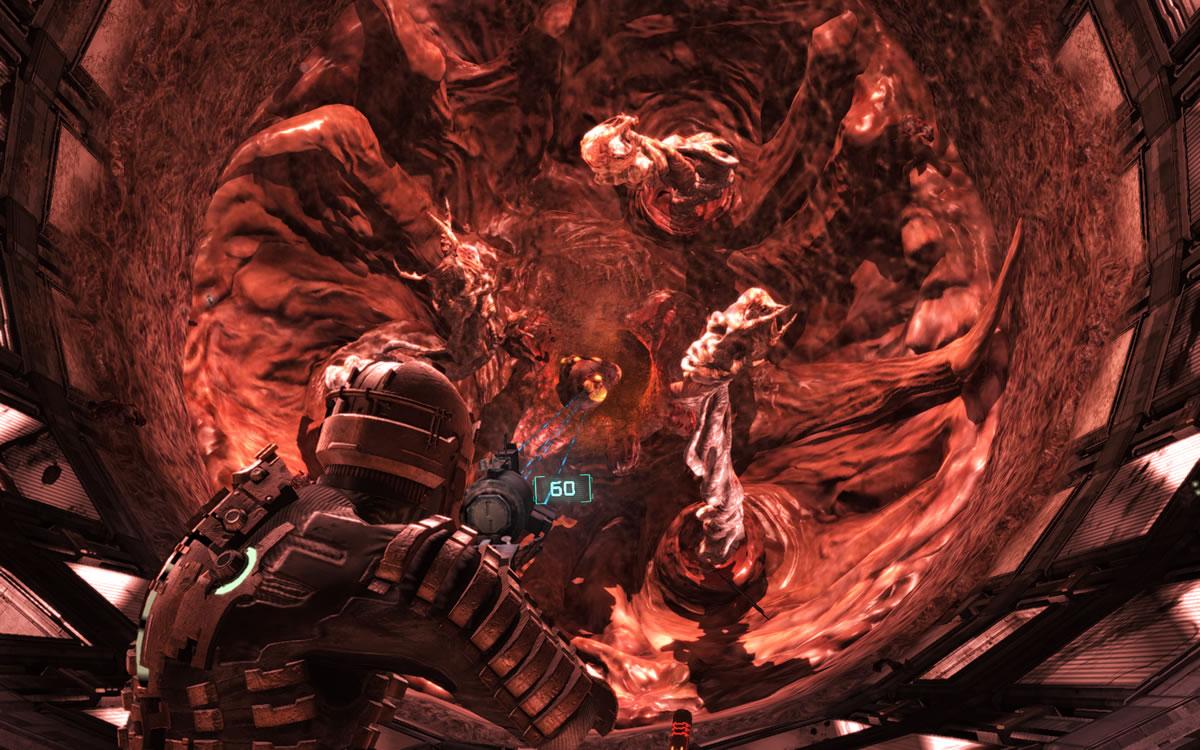
I have found the Savage Dead Space conversion on the +Savage Worlds G+ community back in march 2014. You can still find the original post about it here. It is a conversion of the Dead Space video game, which is sort of sci-fi survival horror. I have chosen this file to review, as apart from being a solid video game conversion, it is also one of those files that can easily be lost in the depths of the interwebs (at the time of writing, the file is not linked on either SavageHeroes or Savagepedia, and googling Savage Dead Space does not point to it). While it might not be 100% complete, there is enough here to have a good one-shot or implement parts of into a larger scope sci-fi campaign (the world of Dead Space might not be suited for long running campaign anyway).

Savage Dead Space consists of two files: rules/equipment and bestiary, both available as pdfs on google docs. I am looking at the only available version - the unfinished version 0.1. 

The biggest draw to this conversion is the bestiary. The Necromorphs are an interesting enemy and author had made sure that each one of them will "feel" different. The creatures have special abilities taken straight from this action game, which makes for some great tactical combat. After all how will you act when you are facing few Dividers (if you kill them, they will divide into 5 smaller creatures) and being lured by a crawler? The creatures in the bestiary are translated to the Savage Worlds ruleset very well. Each creature has a short description and artwork (I asume taken from the game's wiki) which add a lot of flavor to those critters. You should check it out if you need new horror, sci-fi or even fantasy creatures.

The other file gives you a little background on the game world and adds two new Edges and one Hindrance. The only other thing here is a short list of weapons. While both files are clearly unfinished, this one seems even more so. The only "saving grace" for this file are the alternate fire modes for the weapon. I would like to see the at-fire rules in more Savage Worlds settings, I think it is a great addition, especially for more tactics oriented campaigns.

Both files, while unfinished have a good one column layout, using fonts from the game. While this makes the file seem more "thematic", the font is sometimes difficult to read, especially in larger blocks of text. If this file would get finished, I would like the author to use more mundane font for the main text and stick with the thematic fonts to headers. One more thing, I bet this is not author's fault, but the graphics in the file are of a very low quality. I am not sure if this is a pdf conversion issue, or an issue with google docs. Nevertheless, the file is readable.

I would like to see this conversion finished. The author seems to have a knack at creating good tactical options for Savage Worlds players and the game has a great potential for horror/survival one-shot. It will also fit in very well into the Nemezis campaign setting. Check it out, even if you won't use the monsters and equipment you can see how you can make both of them more tactical in Savage Worlds.


03 August 2014

Open Letter to Savage Worlds Bloggers.

Hey Savage Worlds Fan,

How are you? I am doing fine, a bit busy with work, but I get by and still find some limited time to blog here about my hobbies. Which is nice.

I am writing you regarding all those Savage Worlds Fan license creations. You know, the fan-made Edges, Hindrances, Races & Powers, but especially the fully fledged conversions of other games (and more!) to the Savage Worlds system. Even though they are scattered all over the interwebs, some kind folks try to collect them all in places like Savagepedia or Savage Heroes. If you haven't seen many of them, you should check them out - they are good free stuff. You can't get much better than free.

I am concerned, however, that many of those great free supplements don't get the exposure they deserve. They are a labor of love and usually, once created they are not advertised or promoted. Sure, they might be mentioned somewhere on forums, maybe even on social media, but that's all. Some fans may comment and even pass the word, but it might not be enough for some of those projects. I know for a fact, that some great conversions have disappeared from the face of the web and even the eldrich wizardry of Wayback Machine can't bring them back.

It is for this reason that I’m writing you today, to formally request your help in spreading the word about Fan License creations and helping them get readership they deserve. If you have stumbled across a conversion that you enjoyed or even used to play a session or few, take some time and write few thoughts about it. It does not have to be a proper review. Even few of the likes/dislikes will help to spread the word. Maybe you enjoyed how true to the source material the conversion was. Maybe you have adapted some of its monsters into your campaign or just used some Edges in your game? It doesn't matter - just help to spread the word. This feedback will not only allow others to see if they like the conversion, it will also be a huge ego boost for the authors. Who knows, maybe thanks to your "review" they decide to write more free content?

The easiest way to help is to post about fan creations on your blog. Do a proper review, or just write your thoughts about the document. What you liked, what you didn't like. I am sure that people will be interested in our opinions and by this we will introduce new people to some great free savage content. I will start  reviewing fan supplements on this blog and collect those reviews on a page created solely for Savage Worlds Fan Projects Reviews. If you write anything about a fan project - send it my way so I can add it to this makeshift review database. After all, why shouldn't we review something just because it is free?

02 August 2014

What I Think about Nemezis

After seeing Guardians of the Galaxy yesterday, I am hankering for some light heated space campaign.... Savage Worlds style. There is a great Science Fiction Companion for Savage Worlds and some sci-fi settings (Slipstream, Necropolis 2350 and Daring Tales of the Space Lanes to name a few). All of those are great products that I enjoy, but when it comes to my flavor of space adventures I am choosing Nemezis as my go to setting. I feel like this game has flown under the radar for many Savage Worlds fans, so let me tell you a bit about it.


Quick disclaimer. I used to work with the folks from GRAmel, back in their "let's translate Savage Worlds to Polish" days. While I didn't work on Nemezis, my opinions might still be biased. You had been warned.

Nemezis is a Savage Worlds sci-fi setting. Humanity took to the stars millenia ago and colonized most of the galaxy. In this time, humankind didn't encounter any alien civilized races (the book didn't mention it clearly, but I think they did encounter animal like alien life), but managed woke up some cthulhu-like alien space god who destroyed the Earth and continues to destroy human settled worlds ever since. That's the jist of the setting. A sci-fi "kitchen sink" with a cthulhu/zerg threat mixed in. There's also ruins of an ancient space fearing civilization that scratches the Indiana Jones style pulp itch.

The setting comes from a Polish author and was first released in Poland. Actually it was a winner of a contest for a new D20 setting in early 2000s. The contest has gone south (the guy organizing it disappeared with the money) and the game was finally released, years later, under Savage Worlds mechanic.

The book centers around 3 planets of Eclipse system: Ash, Bariz and Cor. Each of them with a different suggested playstyle. Ash is a dying planet. The terraforming machines are malfunctioning and the once resource rich planet is slowly but surely getting covered in ice. This is a perfect place for a survival of the fittest campaign. Bariz is a heaven for diplomats. It's a place of noble houses, artists and backstabbing. Cor on the other hand is a military campaign. The Horde is trying to take over the planet and humans are fighting back... and for the first time in history they are pushing back the Horde. 

Oh yeah, I should explain what is the Horde. When humans woke up the sleeping god on the surface of the titular Nemezis planet, he has summoned/created an army of creatures to fight by his side. Think Starcraft's Zergs when it comes to the Horde - organic, ugly, powerful and with overwhelming numbers. All of those creatures serve the alien gods. Yes, gods - plural. Since humanity released the first one - the Worm of the Void - others have surfaced. Those gods can be easily compared to Earthdawn's Horrors. While they are formidable foes beyond human reasoning (like Cthulhu mythos beings), but are not all-powerful and can be defeated. Some humans see them as nothing less than gods and worship those beings. This adds cults to the mix (always a fun addition!). Cultists are the only ones able to wield magic, as the rest of humanity is limited to psionics for their supernatural needs. Psionic powers have been re-vamped from the vanilla Savage Worlds and given new powers. You also get rules for virtually anything you would need in a space campaign: spaceship rules, cyber/nano/genetic implants, high-tec weapons and armor and a Fast, Furious & Fun rules for Energy Shields. All of this on top of new Edges and Hindrances - not too bad.

All of this creates a good backdrop for a campaign. Outside of the gods, the horde and the Eclipse system you can fill in the Milky Way galaxy anyway you like. There are countless human settlements, each with their own problems, traditions and flavors of humans. This vagueness is actually an advantage, as it opens up the space "kitchen sink" in which you can fit almost anything, even run a space hexcrawl

As there are no intelligent alien races, in Nemezis you play meta-humans. Advanced technology and the need to adapt to new planets allowed humans to change their genome. Many of them will look like your standard "space opera" aliens - those seen in things like Star Trek or even Guardians of the Galaxy. You want a different colored war-mongering humanoid? Maybe a race of great inventors or some animal hybrid? You can have them. Humanity has settled the stars millennia ago - it's only logical  that completely new "civilizations" have been created during this time. For me, this is a great idea, as most of the "aliens" in popular media are just reskinned humans anyway (in TV and movies, quite literally with a new skin of latex and body paint). It always bothered me that most of the aliens were so similar to humans - either in shape, as in understanding of the world. This simple approach fixes that issue. Unfortunately you do not get rules for creating your own races. They had been cut from the original Polish release, because the exact same rules exist in the  Science Fiction Companion. Actually, there are few changes between the Polish and English version of the game, but I would say that the English version is more polished (oh, bad pun!). Especially thanks to some mechanical changes (Nemezis has the best rules for energy shields I have seen in Savage Worlds).

I can see playing "Guardians of the Galaxy"-like campaign using Nemezis without much problem. You have all powerful creatures and ancient mysteries right there in the book. Those can easily mimic threats like Thanos and explain the existence of infinity stones. As for aliens- just create some meta-human races with similar feel. The books is far from perfect, but it ticks most of the boxes I want in a FFF space adventure. The addition of alien gods, cults and the Horde is the icing on the cake. I would just treat the "core" planets of the Eclipse system as backdrop and go explore the galaxy.