Pages

Showing posts with label Video Games. Show all posts

06 July 2015

I've been texting with a stranded astronaut!

I have always been a fan of "Choose Your Own Adventure" books, but outside of a free Lone Wolf app, I never really tried it packaged as a game. Honestly, I've gotten this game, because it was on sale and I've heard good things about it here and there. I was not prepared for what it offered.

You know, there are some games that break the barrier between fact and fiction. ARGs or Omikron: The Nomad Soul comes to mind. Lifeline gives you a similar experience, but delivers it in completely different and innovative way. When you open the app for the first time, you will receive a transmission from someone named Taylor, who is stranded on some good forsaken moon. The ship is crashed and you (the player) are the only person Taylor could reach. So you begin to talk.

The game is basically an interstellar chat app. Taylor writes what's up and every now and then, you can respond, give advice or even make decisions on how Taylor should approach any given task. That's it. That's all there is. No stats, no inventory, just a conversation between two strangers light years away. This alone makes the game quite immersive, but there's more...


To reinforce the fact, that Taylor is a real person, stranded on some lonely moon, the game adds an element of real time. Whenever Taylor goes off to do something you see "[Taylor is busy]" and the app stops responding. Now you can only wait. You don't know exactly when you will receive another message. Sometimes, Taylor will give you a hint "I'll report back in half an hour", but often you will have no idea. This adds to the whole immersion factor, as I found myself thinking what is Taylor doing, how is his trek, did anything interesting happened? Them, you receive a text saying "oh no" and you jump in to see what happened, because you start carrying about this stranded astronaut.

This waiting aspect, and first person narration make this much more than a "Choose Your Own Adventure" game. The barrier between what's real and what's fiction is much thinner than in other (even similar) games. It is much easier to believe that you are talking to someone light years away, than believing that you are in that place, while you are clearly sitting on your couch and drinking coffee. After a while, receiving a message from Taylor, will be almost like receiving a text from someone you know You will want to know what happened when they were away. It is a great mechanic that I am hoping to see in more "Choose Your Own Adventure" style games.

If you are thinking of getting Lifeline (iOS and Anroid), know that it is more an experience than a game. Gameplay is limited to those binary choices while you chat. It is more like a good book, but you are getting more invested in the character and can actually advise them on how to proceed. Comparing Lifeline to book is not a bad idea actually. Just like a good book, this game is a vessel to transport you to that fictional world. While the whole game takes place on a barren, almost featureless moon, the writing brings it to life. Especially, that everything is narrated from Taylor's point of view, who has pretty quirky, but relatable outlook on the whole situation. During the few days it will take you to complete the game, you will get to know Tyler pretty well. I was sad when the story finished and the communication ended. I wish I could still receive texts from this person who I helped during the shittiest time of their life.

21 July 2014

Video Games can make your RPG better!

...or how to get source material for your RPGs from AAA games.

Let's talk about video games for a while. While tabletop gaming has stayed more or less a niche hobby, video games have gone through quite a journey since their humble beginnings. There is no denying that video games' popularity sky-rocketed in the past decade or so. Thanks to that, AAA video game companies nowadays have budgets comparable to blockbuster movies. They spend a lot of money on writers, designers and artists. Not to mention paying for focus groups and playtesters to make sure the game is accessible and satisfying. There are a lot of creative and talented people working in the video games industry right now, making really awesome things. That's a lot of high quality art, plots, levels and other designs just waiting to be discovered.
Even if you are not an AAA gamer (like myself), you can take inspiration (or simply take ready-made pieces) from those blockbuster games and use it in your campaign. You can find everything - from detailed dungeon maps, through fully fleshed NPCs, interesting monsters, adventure and quests ideas to small things like magic items and weapons. You get some inspirational quality artwork to go with this as well. If you look at it the right way - all of this is a system-agnostic source material, that can be hacked and transplanted straight into your games. Just choose a video game with a similar setting to what you are currently running and you are good to go.

Apart from the ready made content, video games can teach us a bit about good design practices. Of course, not everything will seamlessly translate to the tabletop medium, but there are some interesting video game "mechanics" we can use in our sessions.

Video game artbooks, strategy guides and (most importantly) wikis hold a plethora of content for you to choose from. Fan curated wikis are the highlight of the bunch. What they lack in art, they make up with detailed descriptions and accessibility. After all, they are available freely online. Below you'll find examples of where and what to look for when mining those sources for good inspirational content.

Items, Weapons, Armor and all that jazz.

You can always use some more clutter in your games, right? Well, wikis (especially those for cRPGs) are the to go places for findings items that will fit your campaign. Almost every wiki will have a page dedicated to showcasing the games equipment. Like the ones for Dragon Age: Origins or Skyrim. Of course the damage and prices won't translate 1:1 to your system of choice, but you get some cool art and often some flavor text - really, that's all you need to introduce some new items.
It gets even better when you want some artifacts. Unique equipment from computer games will usually have a story behind it and much cooler design.
If you are simply looking for art to either represent the item during a session or for inspiration, you can't go wrong with artbooks. They will usually have a section dedicated to equipment filled with gorgeous concept art. It is worth investing into few AAA game artbooks.


Design wise, many computer games nowadays are moving away from simply giving the player better "stuff" as the game progresses. Sure, it seems logical to give  players more powerful weapons and armor every time they achieve something. The truth is, by doing so you will soon run into a power creep issues. On the tabletop side of gaming, this means that you have to make your enemies stronger to pose any challenge to the players. You are also taking away choice from the player. After all, it's a no-brainer to exchange the sword+2 with a mace+4.

To avoid that, you can experiment with Team Fortress 2 style item mechanics (as pictured above). Each of them has a strength and a weakness, so no single item is clearly better than the other. In games like that, players choose weapons based on their play style and current situation. Maybe the new crossbow is much more powerful but it is very loud, or take forever to reload? This way you allow your players to experiment with different tactics, which can be a fun experience. 

Level Design, dungeons, towns...and names?.

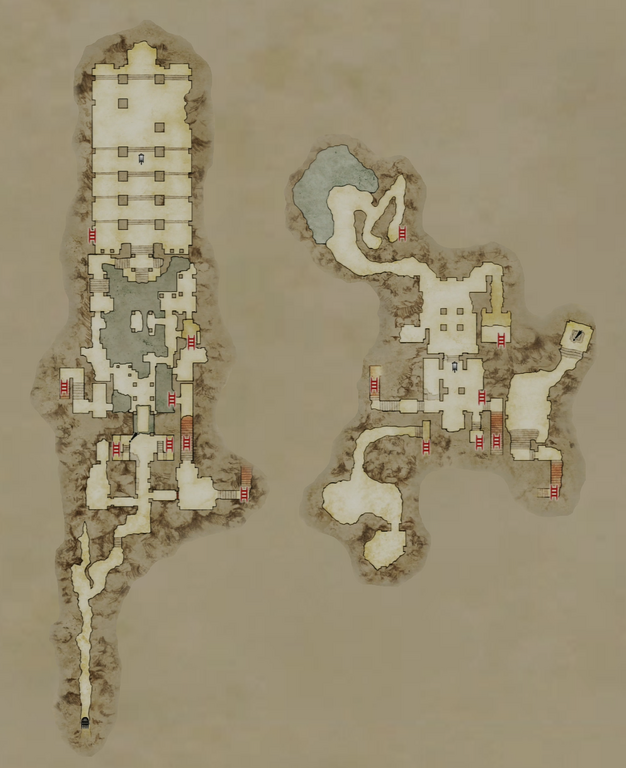
Every game needs to take place somewhere, so why not use what's already there? When you need a dungeon or a town, you can do much worse than "borrowing" one from a video game. Heck, cRPGs and action games are basically littered with them.
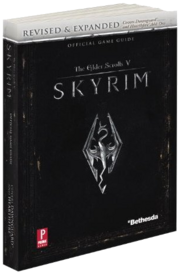
For maps your best bet is to go with a strategy guide. Wikis have maps here and there, but any strategy guide worth it's salt will have maps paired with detailed descriptions of what is found where. Getting few strategy guides shouldn't be a big burden, as they can be found online and in charity shops for next to nothing.

For gameplay reasons you won't find vast mega-dungeons and truly city-sprawling settlements in video games. A small dungeon or a nice looking village/town (re-skinned from a video game "city") map can be found easily, usually with some cool location names, enemy types and some vistas to go along with it. Use the whole "set" or pick and choose what you want. Try to stay away from very iconic motives, especially names. You probably have players who know what Winterhelm, Megaton or Kaer-Morhen is, but not many of them will know where the Frostmere Crypt, Cottonwood Cove or Loc Muinne comes from. So, don't be afraid to take few names and put them in your campaign - video games are filled with good location and NPC names.

Monsters and other Enemies

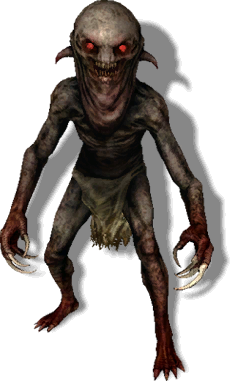
Steal enemies. Plain and simple. The video game monster come not only with great artwork that can be an inspiration for narration, they also have their own tactics, flavor text and possible loot drops. More than this, many video game monsters have special moves and AI. Maybe they attack in swarm and explode upon deaths? Maybe they are immune or have a weakness against certain element? All of those things can be adapted to tabletop and they make for a fight. When looking for interesting monster AI, look outside the cRPG genre. Action games have a wider variety of monster behaviors. A good source for Boss enemies are MOBAs. Each "character" in any MOBA has a set of skills that can be translated to some cool RPG attacks. Because of recent MOBA popularity you can find very detailed wikis describing them. You can easily re-skin those characters to make an interesting boss encounter.

Is that all?

Not by a long shot. There is a lot more that can be mined from AAA games - NPCs, quests, subsystems, mechanics and we didn't even touched on the topic of music (game soundtracks make a great session background noise). There is also much more we can learn from analyzing the game's design choices. But this topic is way to big to fit into a blog post (and possibly my brain).

Bottom line is - AAA video games must be doing something right to stay so popular, so why not use some of their content in our hobby? Thanks to fan created wikis, official artbooks and strategy guides we are given great amount of inspirational tools. So, visit some game wikis, get some cheap strategy guides from your local charity store, invest in some artbooks from games you really enjoy and mash, hack and adapt this content to RPGs!

16 April 2014

micro Review - Intro & InSpectres

I check out a lot of games. From RPGs, trough card and board games, down to video games. There isn't a week, that I don't discover and investigate some type of game. I am especially interested in small and indie productions. They are the ones that usually have some interesting mechanic or a gimmick, that catches my attention. Sadly, many of those games fly under the radar of most gamers. In this recurring segment I try to will give some sort of spotlight to those small games I discovered. This is not a full review, just my impressions in a few paragraphs... a micro review.


micro Review?

Yeah, I call it micro review. The plan was to call it "ยตView"  with the fancy micro symbol that looks a bit like "u". It was a play on words so, it will look like "U View". This was supposed to encourage you to go and check the game out yourself. The idea was scrapped, it looked silly and didn't display correctly everywhere ;) Anyway...
There is a lot of great games out there, and a lot of brilliant people who create them, that don't get enough recognition they deserve. I hope that this little section will introduce you to some games, that you would otherwise overlook.

I am planning for those reviews to happen weekly. The plan is to (re)read/try the game around weekend and write my thoughts and musings during the week. The aim is to introduce you to the game in a "elevator pitch" manner - quick and fun, with focus on highlighting its strengths. Those micro reviews will always have a link to the place where you can get the game, so you are only one click away from checking it out. While those reviews will center on RPG related content, all types of games are fair play here - RPGs, Story Games, Board games and even video games. All games are cool! So without further ado, I introduce you to this week's micro review.


InSpectres by Memento Mori Theatricks


A true pick-up game. Your scheduled session was canceled? Some guy didn't show up? Fancy some horror-comedy in the vain of Ghostbusters? Open this book, get some D6s and start playing!

Players are InSpecter agents who, much like the ghostbusters, specialize in dealing with things that bump in the night. The game is a rules-lite, lighthearted horror, where anything can happen, as both the GM and the PCs can influence the plot. This is the main strenght of InSpectres - GM doesn't need to prepare anything! Plot hook is randomly generated and from there the dice decide what happens. You rolled well? You can decide what happened. Rolled poor? It's GM's turn to decide. Because no plot was prepared for the session, neither players, nor the GM knows what will truly happen during the adventure - they just make it up, as they go. Playing this game will teach you about story creation and improvisation. Because InSpectres is a comedy at its core even outrages ideas can be easily incorporated and it won't mess up the game. 

If it sounds like some kind of story game, you won't be far off. But, contrary to the story games of today, this game still feels like a proper RPG. Characters have attributes, gain experience (trough expanding their InSpectres franchise), there's a GM and all that jazz. It is a hybrid of story/narrative games and RPGs. If you wanted to try story games, but couldn't convince your RPG pals to give it a spin, where curious about narrative games in general, or want to test and polish your improv skills, while having a laugh - you can't go wrong with InSpectres!

P.S. If ghostbusters-like horror-comedy is not your cup of tea, try out InSpace from Lame Mage Productions - a free supplement where you play a crew of a starship investigating strange phenomena in spaaaaaaceee....

25 February 2014

DRAWCEPTION! - Eat Poop You Cat!


You are probably familiar with the game of Chinese Whispers. You probably played is as a kid. You probably even found it funny back then. But as the years have passed, you enjoyed it less and less. And just like other kid games, you stopped playing, because it wasn't fun anymore...
What, If I told you, that there is a much better/funnier game with a similar mechanic, but uses drawing and writing instead of whispers? This game is full of pop-culture and geeky references,  memes, and other internet culture.
What if I told You that can play it for free right now?


Let me introduce you to Drawception!


What is it?

I couldn't sum up the game better than the game's creator did. Drawception is "A free web game that combines drawing with the classic "Telephone Game". As a phrase is drawn and described by players it changes in unexpected ways. Miscommunication and hilarity ensues!"
When you choose to play, you are given either a prompt with a phrase to draw, or a picture to describe. Your input is a part of a larger chain (usually 12 panels - 6 drawings and 6 descriptions). You can choose to skip this prompt, and you are given a new one. You can skip as much as you want (most players do) until you find a prompt you like. Then, you have 10 minutes (60sec in a Blitz Game), to either draw or describe. Once you are done with your creation, you submit it and wait for the game to finish.
Games usually take a day or so to finish, but you can play more than one game at a time (8 at the start, 32 when you level up). Once a game is finished, you can see all of the panels, and how the original prompt got twisted during the course of the game - you laugh, "thumb up" your favorite panels (those thumb-ups are the experience points of the game) and play again.

That's it?

Well, yeah - that's all the rules for the game, but you are not playing here for rules. Just like RPGs or Story Games, rules are only a siphon for the experience you will have.
Drawception has a great strange community of players - some are amazing artists, some are amazingly funny - but all of them have one in common: they love geek and pop-culture references! If you enjoy the "internet culture" you will be right at home here. Puns, Memes, Sublimal  Batmans - they are all here, in a weird social experiment of a game. You might need to play a bit to get into the really good games. You get access to vet(eran) games at level 20 - and vet games are where all the cool kids hang out! But even starting up you will have fun and have a laugh. You don't need to be an amazing artist to play. Sure - the great artists are getting a lot of exp for their work, but so many games take a left turn because someone thought your drawing of a turtle was a cabbage.

I started playing Drawception in 2012. Every time I thought I was done with the game, I found myself coming back to it every now and then. For me it is a mark of a great game!
On top of that, I think my drawing skills improved quite a bit thanks to drawception. Win - Win!

If any of this sound interesting - head down to Drawception.com and start playing! And while you are there, check out my gallery of games.

And if you want to play this game with your friends in the mythical offline world - check out Eat Poop You Cat or one of its commercial kin like Telestrations or Cranium scribblish.